CDL Enforcement Tightens as California and New York Take Different Paths
Federal enforcement around non-domiciled commercial driver licenses is moving into a more active phase, and the response from major freight states is already diverging in ways that could impact regional capacity.
New York has taken steps to halt new issuances of non-domiciled CDLs while pushing back on requirements to review and revoke previously issued licenses. That creates a more gradual and uncertain enforcement environment, where capacity impacts may unfold unevenly over time.
California is facing more immediate operational disruption. The state has been required to cancel certain non-domiciled licenses and pause portions of its licensing activity while addressing compliance concerns. That has more direct implications for the available driver pool, particularly in port and drayage-heavy markets where these drivers are more concentrated.
For shippers, the key issue is how differently these changes are being implemented. In California, faster compliance actions could tighten capacity more quickly around major gateways. In New York, ongoing friction between state and federal expectations may lead to a less predictable but still evolving capacity environment.
This introduces regional variability that is not tied to demand. Carrier availability, onboarding timelines, and service consistency may shift depending on how enforcement plays out locally, especially in markets that rely heavily on these driver segments.

Proposed $5M Insurance Minimum Could Reshape Carrier Capacity
The push to increase the minimum insurance requirement for motor carriers is back in focus, with legislation reintroduced that would significantly raise the current threshold. While the proposal is still early in the process, it reflects a long-running debate that continues to surface as operating costs and risk exposure evolve.
The current minimum has been in place for decades, and the argument for raising it centers on how much the industry has changed since it was last updated. As costs tied to accidents, equipment, and liability have increased, the question of whether existing coverage levels are still adequate has come back into focus.
For carriers, the potential change is straightforward. A higher minimum would increase operating costs and raise the barrier to entry. That could make it more difficult for some operators to remain competitive, particularly those with less financial flexibility.
For shippers, the impact would likely develop gradually rather than immediately. Capacity could shift toward larger carriers that are better positioned to absorb higher insurance costs. That may improve consistency in some areas, but it could also reduce flexibility and limit options, particularly in tighter or more specialized markets.
Even at this stage, the conversation itself can influence behavior. Carriers may begin preparing for higher costs, and insurers may adjust pricing expectations in response to the direction of policy discussions.
The key takeaway is not that change is imminent, but that the structure of the carrier market could shift over time if the proposal gains traction. Planning for that possibility now can help avoid disruption later.

Fuel Volatility Is Changing How Shippers Plan Freight
Fuel markets have steadied at times, but recent geopolitical tension continues to keep pricing sensitive to new developments. Even when prices pause, they remain reactive, shifting quickly as conditions evolve rather than following a stable trend.
That matters for freight because fuel is one of the few inputs that can influence both cost and operational decisions at the same time. As markets respond to uncertainty, diesel pricing continues to move in ways that can affect carrier behavior, lane selection, and equipment positioning.
In this environment, maintaining optionality becomes increasingly important. Shippers that have flexibility in their networks are better positioned to respond when conditions shift. That includes the ability to evaluate multiple modes, diversify carrier relationships, and adjust routing strategies as needed.
Planning also plays a role. Building in flexibility around transit times, maintaining visibility into market conditions, and avoiding over-reliance on a single approach can help reduce exposure to sudden changes. When fuel markets are reacting to external pressure, even small movements can ripple across the network.
Fuel volatility is not new, but the current environment reinforces how quickly conditions can change. For shippers, the focus is less on predicting where prices will go and more on staying adaptable as new developments continue to influence the market.
Faster Asia–East Coast Transit Is Reshaping Routing Decisions
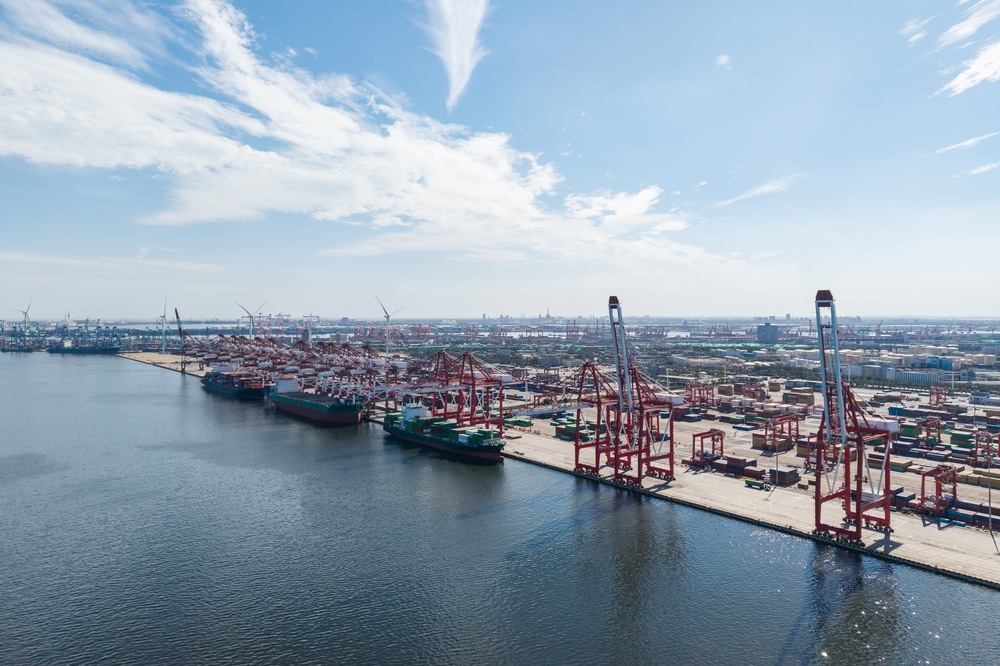
Transit times from North China to the U.S. East Coast are improving, with some services reducing overall transit by a meaningful margin. That shift is being driven by adjustments in carrier routing and service design, particularly on lanes moving out of ports like Tianjin, where transpacific volumes to the U.S. are increasing.
While transit time has historically favored West Coast entry points, these improvements are starting to narrow that gap. As a result, routing decisions that once leaned heavily on inland rail or truck moves from the West Coast may now have viable alternatives that bring freight closer to final destinations earlier in the journey.
At the same time, rising export activity out of North China is reinforcing the importance of these lanes. As volumes grow, carriers are continuing to refine service offerings, which can further influence transit consistency and routing options across the Pacific.
For shippers, this creates a more dynamic decision-making environment. When transit times shift, even incrementally, it can change how cost and service tradeoffs are evaluated. Freight that once required a faster inland move may now be able to move more directly, depending on delivery requirements and network design.
These changes do not eliminate variability across the broader ocean network, but they do introduce new flexibility. Shippers that revisit routing assumptions and evaluate how these evolving services align with their distribution strategy may find opportunities to improve both efficiency and positioning.

FMCSA Overhauls DataQ System, Changing How Safety Data Is Challenged
The FMCSA is rolling out updates to its DataQ system that change how carriers challenge and correct safety data, with a focus on improving consistency and transparency in the process. While the system has long been used to dispute inspection and crash records, the updated version introduces a more structured approach to how those requests are handled.
One of the key changes is a more centralized and standardized review process. The updates are designed to reduce variation in how cases are evaluated and create a more uniform experience for carriers submitting requests.
The system also improves visibility into the status of those requests. Carriers now have clearer insight into how their submissions are progressing, along with greater transparency into how decisions are made. These changes are intended to streamline the process and improve overall efficiency.
For carriers, the result is a more predictable framework for addressing data issues. For shippers, the impact is more indirect but still important. Safety data may become more consistent over time, but also more dynamic as records are reviewed and updated under the new system.
As these changes take hold, safety scores may shift in ways that are not always tied to recent operational performance. That makes it important to view safety data as part of a broader evaluation rather than relying on a single metric in isolation.

FMC Holds Firm as Carriers Push for Faster Fuel Surcharges
Ocean carriers are facing rising fuel costs tied to ongoing geopolitical disruption and have pushed for more flexibility in how quickly those costs can be passed through to shippers. While Maersk has been one of the most visible in filing requests, the effort reflects broader concern across the carrier industry.
The request centers on reducing or bypassing the standard waiting period required before new surcharges can take effect. The proposed changes are tied to recent increases in fuel costs and disruption affecting global shipping operations.
The Federal Maritime Commission has declined those requests, maintaining that existing rules should remain in place. The agency’s position reinforces a structured process for rate changes, including advance notice requirements.
For carriers, this creates a gap between rising costs and the ability to formally recover them. That pressure may lead to adjustments in other parts of the rate structure, including base rates or more broadly applied pricing mechanisms.
For shippers, the impact is less about avoiding cost increases and more about how those increases appear. When surcharge timing is constrained, costs may be distributed across multiple components rather than reflected in a single, clearly defined line item.
This dynamic highlights the tension between market conditions that are changing quickly and pricing mechanisms that are designed to move more gradually. As fuel volatility continues, that gap is likely to remain a factor in how ocean pricing is structured.
This content is provided for general informational purposes only and reflects publicly available information and industry observations as of the date of publication. It is not intended to constitute legal, regulatory, insurance, or operational advice, and should not be relied upon as a substitute for consultation with qualified professionals. Cornerstone Systems, Inc. makes no representations or warranties, express or implied, regarding the accuracy, completeness, or timeliness of the information, and assumes no liability for any actions taken or not taken based on this content. Market conditions, regulatory developments, and operational impacts may change, and readers are solely responsible for evaluating how any information may apply to their specific circumstances.