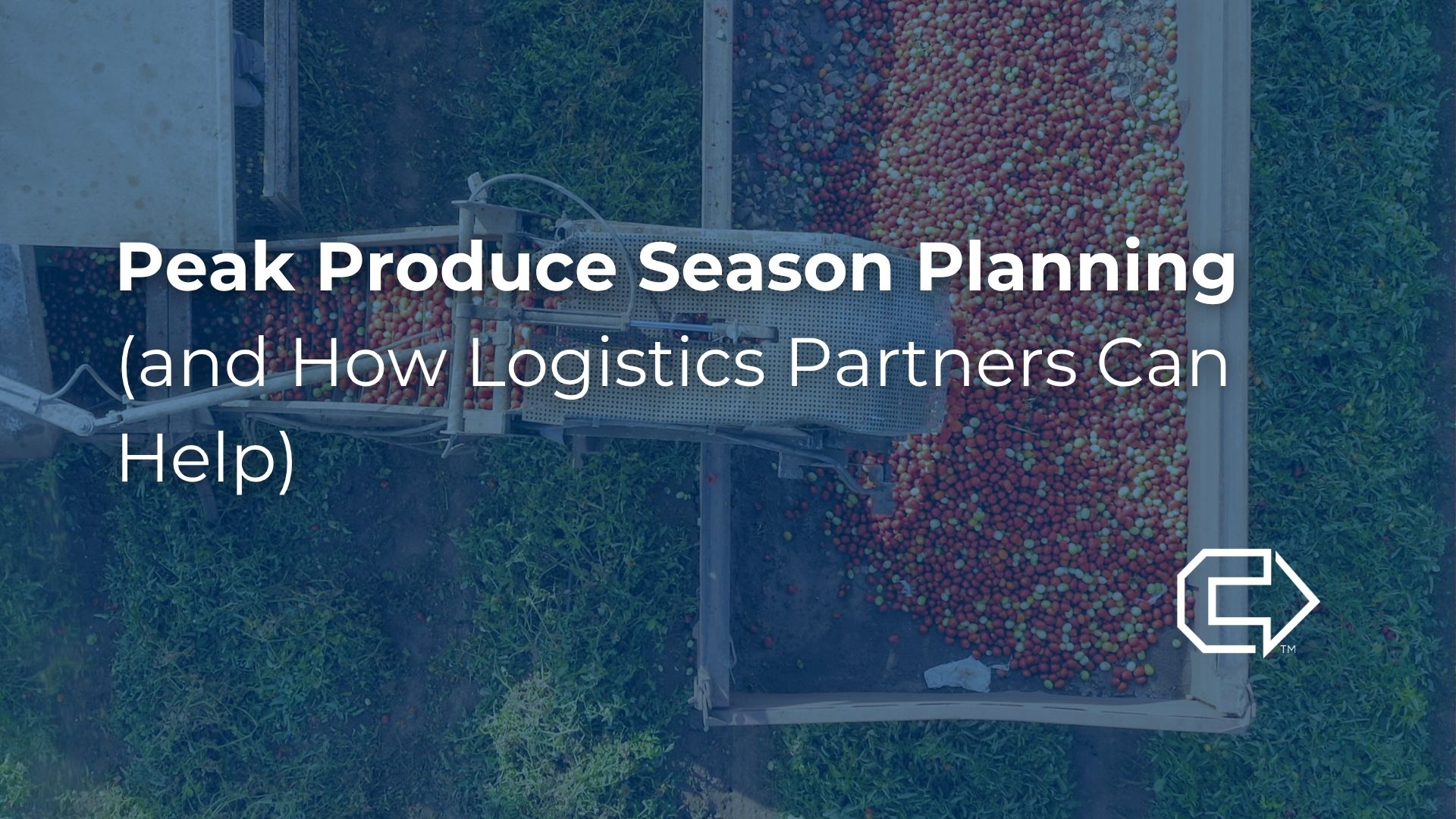
Peak produce season is always a stress test for supply chains. It brings tighter capacity, more time-sensitive freight, and increased competition for refrigerated equipment. In a typical year, much of that activity is predictable. Networks shift toward Florida and other growing regions, reefer demand rises, and planning becomes a matter of execution.
This year will not follow that pattern.
A Different Kind of Produce Season
Florida normally serves as a primary source of fresh produce for much of the eastern United States during the early part of the year. That consistency is what allows shippers to plan lanes, secure capacity, and build seasonal playbooks with some level of confidence.
This season, that foundation has been disrupted.
Severe winter weather across Florida caused widespread crop damage during a critical growing window. In many areas, yields were significantly reduced, and in some cases, entire crops were lost. The full impact will continue to unfold over time, but the immediate effect is already clear. The expected volume flowing out of Florida is lower, less predictable, and more uneven than what the market typically plans around.
That shift matters because produce season is not just about volume. It is about where that volume originates and how consistently it moves.
What This Means for Freight Networks
When a major produce region underperforms, freight does not simply disappear. It relocates.
With Florida volumes reduced, more produce is expected to move from alternative growing regions, particularly across the southern border and parts of the Southwest. That changes lane lengths, transit times, and equipment cycles. A load that would normally move a shorter distance up the East Coast may now originate farther west or south, tying up trucks for longer periods and reducing overall network velocity.
At the same time, demand for refrigerated equipment does not decline in proportion to the supply disruption. In some cases, it becomes more concentrated in specific regions, which can create localized capacity tightness even if the broader market still appears balanced.
This creates a more complex operating environment:
- Reefer capacity may be available, but not where it is needed
- Transit times may lengthen due to shifting origins
- Routing guides may underperform as traditional lanes lose consistency
- Spot exposure may increase on lanes that were previously stable
In short, the challenge is not just securing trucks. It is securing the right trucks, in the right places, at the right time.
The Ripple Effect on Cost and Service
Produce freight is inherently time-sensitive. When disruption enters the system, service risk increases quickly.
Longer hauls, tighter equipment positioning, and shifting pickup locations can all introduce variability into transit schedules. That affects not only delivery performance, but also downstream planning for distribution centers, retailers, and end customers.
Cost pressure tends to follow. When trucks are tied up longer or repositioned across greater distances, pricing adjusts to reflect that reality. Even in a market that has been relatively stable, produce season can create pockets of volatility, especially when normal patterns are disrupted.
For shippers, this is where assumptions can become outdated quickly. A lane that performed reliably last year may behave very differently this season, not because demand has surged, but because the network itself has changed.
Where Logistics Partners Add Value
This kind of environment is where the role of a logistics partner becomes more visible.
Produce season has always required coordination, but a disrupted season requires adaptability. That shows up in several ways.
Proactive network adjustments
When origin points shift, routing strategies need to adjust with them. Identifying alternate sourcing regions, adjusting transit expectations, and planning for longer equipment cycles helps avoid reactive decision-making later.
Access to flexible capacity
Reefer availability can tighten quickly in concentrated regions. Having access to a broader carrier network, along with the ability to reposition equipment when needed, becomes a meaningful advantage.
Real-time visibility and communication
When schedules become less predictable, communication becomes more important. Visibility into shipment status, potential delays, and changing conditions allows teams to respond earlier rather than react after service failures occur.
Contingency planning
In a disrupted produce season, not every load will move as originally planned. Having backup options in place, whether that is alternate carriers, adjusted delivery windows, or revised routing, helps maintain continuity when conditions shift.
Planning for What Is Not Predictable
The defining characteristic of this produce season is not just reduced volume. It is reduced predictability.
That does not mean planning becomes less important. It means planning needs to account for variability rather than assume consistency.
Shippers that take a flexible approach to routing, maintain optionality in capacity, and stay close to real-time market conditions will be better positioned to manage both cost and service. Those that rely too heavily on last year’s patterns may find themselves reacting more than they would like.
Produce season will always bring pressure. This year, it is bringing change as well